
Why Your Calories Might Be TOO LOW to Lose Fat
If you’re eating less, training more… and still not losing weight — this might surprise you:
Your calories could be too low.
Sounds backwards, right?
But this is one of the most common reasons we see women stuck, frustrated, and ready to give up. Let’s break it down.
🚫 The “Eat Less, Move More” Trap
So what happens?
You drop your calories really low
You cut carbs, skip meals, eat “clean”
You push harder in the gym
And at first… it works.
But then:
Progress slows
Energy drops
Hunger increases
And the scale stops moving
⚠️ What Happens When Calories Are Too Low
Your body isn’t stupid — it adapts to survive.
When you under-eat for too long, your body:
Slows your metabolism
Reduces calorie burn (without you realising)
Increases hunger hormones
Decreases energy and performance
This is called metabolic adaptation.
😩 Signs Your Calories Are Too Low
If this is you, it might not be a motivation issue — it’s a strategy issue.
Look out for:
Constant fatigue
Always thinking about food
Bingeing or “falling off track”
No strength or progress in workouts
Hitting a weight loss plateau
Poor sleep or recovery
💡 Why Eating MORE Can Help You Lose Fat
This is where most people get it wrong.
Sometimes, the fastest way forward is to:
👉 Increase your calories (strategically)
When done properly, this can:
Boost your metabolism
Improve energy and training performance
Reduce cravings and overeating
Support long-term fat loss
More food = better output = better results.
🔥 What You Should Do Instead
Instead of constantly cutting calories:
Focus on adequate protein intake
Build a structured, sustainable calorie target
Train with intent and progression
Prioritise steps, sleep, and recovery
Fat loss isn’t about eating as little as possible…
It’s about eating the right amount for your body.
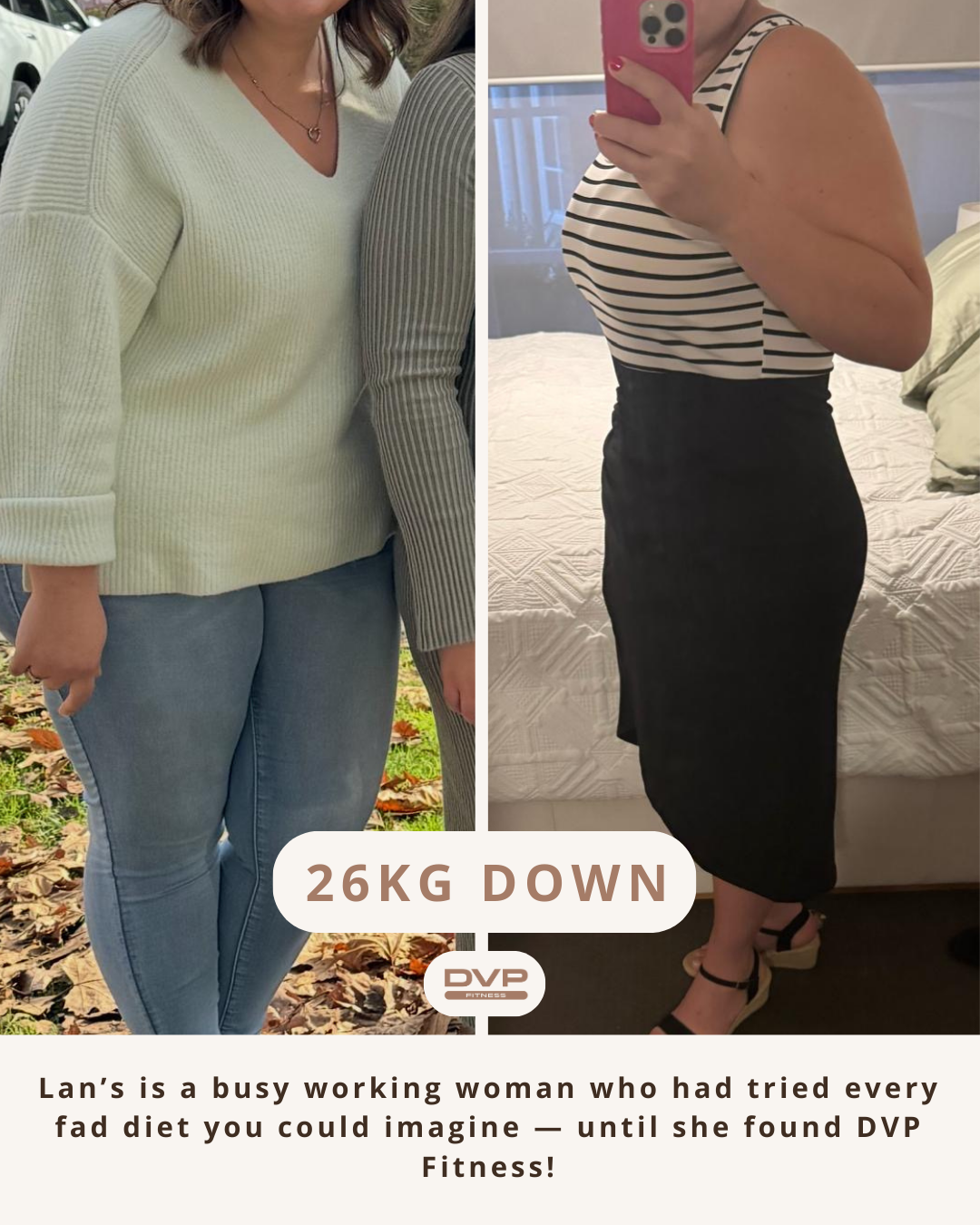
At DVP Fitness, we teach clients how to track progress without letting the scale derail their confidence.